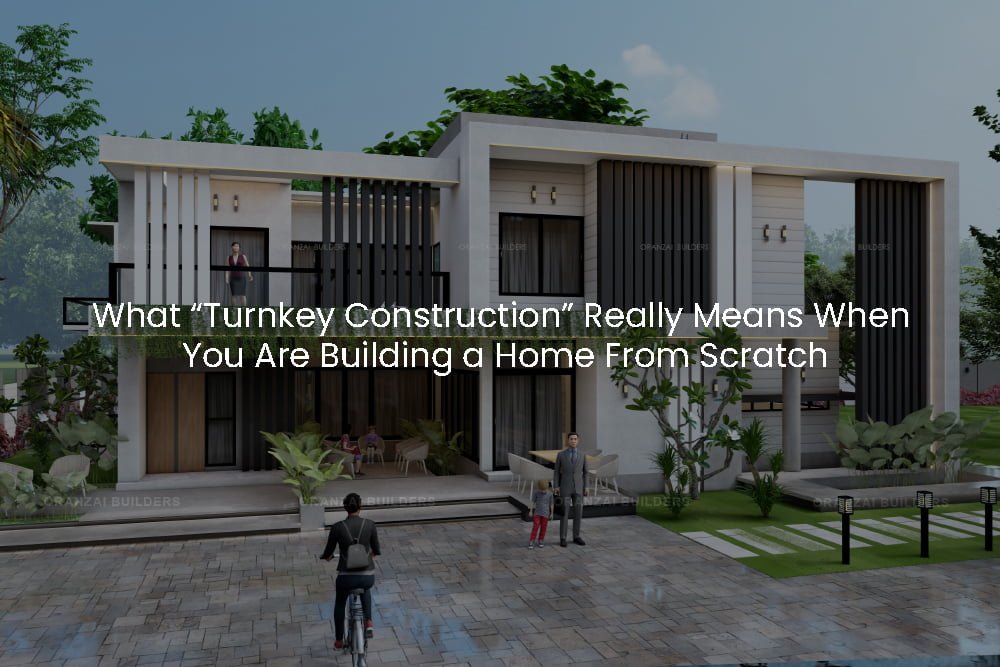
When homeowners start planning a new house or villa, the word turnkey construction comes up very quickly. It sounds convenient, complete, and reassuring. But in practice, many people are unclear about what it actually includes and what it does not.
As professionals who work on complete house projects from the ground up, we often meet property owners who assume turnkey simply means faster construction or fewer phone calls. The reality is deeper than that. True turnkey construction is about responsibility, coordination, and accountability from the first drawing to the final handover.
This article explains what turnkey construction really means when you are building a home from scratch, and why it matters so much for homeowners who want a smooth, predictable experience.
Turnkey Construction, Explained in Simple Terms
In a true turnkey construction model, one company takes complete responsibility for your home project. That includes:
- Architecture and design planning
- Structural construction
- Interior design and execution
- Material coordination and procurement
- On-site execution and quality control
- Final finishing and handover
You deal with one team, under one contract, with one point of responsibility.
There is no splitting work between architects, contractors, interior designers, and vendors who do not coordinate with each other. The same team plans, builds, and delivers the house as a complete product.
For property owners building a new home, this clarity is often the biggest advantage.
What Turnkey Construction Is Not
It is equally important to understand what turnkey construction does not involve.
Turnkey construction does not include renovation or remodeling of existing homes. It is meant for fresh construction on owned property, where planning starts from a blank slate.
It is also not partial work. A true turnkey company does not take up only structure, only interiors, or only execution. The strength of the model lies in handling the entire scope together.
When responsibilities are divided, accountability gets diluted. Turnkey construction avoids that problem by keeping everything under one roof.
Why Single-Point Responsibility Matters in Home Construction
Building a house involves hundreds of decisions. When multiple parties are involved, small coordination gaps can turn into major delays or cost overruns.
In a turnkey setup, design and construction teams work together from day one. Architectural planning considers interior layouts. Structural decisions account for furniture loads and services. Electrical and plumbing routes are planned before walls are built, not after.
This integrated approach reduces:
- Rework on site
- Conflicting instructions
- Delays due to miscommunication
- Budget surprises during execution
For homeowners, this means fewer unknowns and a more controlled building process.
The Role of Architecture in Turnkey Projects
Architecture is the foundation of any successful turnkey project. It is not just about elevation or aesthetics. It is about planning spaces that work structurally, functionally, and emotionally.
In turnkey construction, architects work closely with execution teams. This ensures that designs are practical to build and aligned with budget and timelines.
Good architectural planning answers questions early:
- How will the house sit on the plot?
- How does light and ventilation flow?
- How will rooms connect and function?
- Where will services run without compromising design?
When architecture is disconnected from construction, problems appear later. Turnkey construction avoids this disconnect.
Interior Design Is Not an Afterthought
One common mistake homeowners make is treating interior design as something to decide after construction starts. In a turnkey model, interior design is planned alongside architecture.
This allows:
- Proper space planning
- Accurate electrical and lighting layouts
- Correct structural provisions for wardrobes, kitchens, and storage
- Better material coordination across the house
When home interiors are planned early, the house feels cohesive and finished at handover, not like a structure waiting to be completed.
Budget Clarity and Cost Control
Budget overruns usually happen when scope is unclear or keeps changing. In turnkey construction, the scope is defined early and priced as a complete building solution.
This does not mean the budget is rigid. It means changes are controlled, evaluated, and communicated clearly before execution.
For homeowners, this brings:
- Better financial planning
- Fewer surprise expenses
- Clear understanding of where money is spent
Because design and construction teams work together, decisions are made with both aesthetics and cost in mind.
Execution and Quality Control on Site
Designs only succeed when execution matches intent. In turnkey construction, site execution is managed by the same team that planned the project.
This ensures:
- Materials are used as specified
- Details are executed correctly
- Quality checks happen at every stage
- Timelines are monitored realistically
Instead of chasing multiple vendors, homeowners have one team responsible for delivery.
Handover That Feels Complete
A well-executed turnkey home does not feel “almost done.” It feels ready to live in.
At handover, the house should have:
- Completed construction
- Finished interiors
- Functional services
- Cohesive design across all spaces
This is the real promise of turnkey construction, not just speed or convenience, but completeness.
Is Turnkey Construction Right for You?
Turnkey construction works best for property owners who:
- Are building a new house or villa
- Want clear accountability
- Prefer structured planning over ad-hoc decisions
- Value long-term quality over short-term shortcuts
If you want to be involved in decisions without managing daily coordination, a turnkey model offers the right balance.
Final Thoughts
Turnkey construction is not just a service model. It is a mindset of taking full responsibility for someone’s home.
When architecture, construction, and interior design are planned and executed together, the result is a house that works well, looks balanced, and stands the test of time.
If you are planning to build a home from scratch on your own property, speaking early with a turnkey construction professional can help you understand the process, set realistic expectations, and plan with confidence.
A well-built home begins with clarity, and turnkey construction is one of the most effective ways to achieve it.