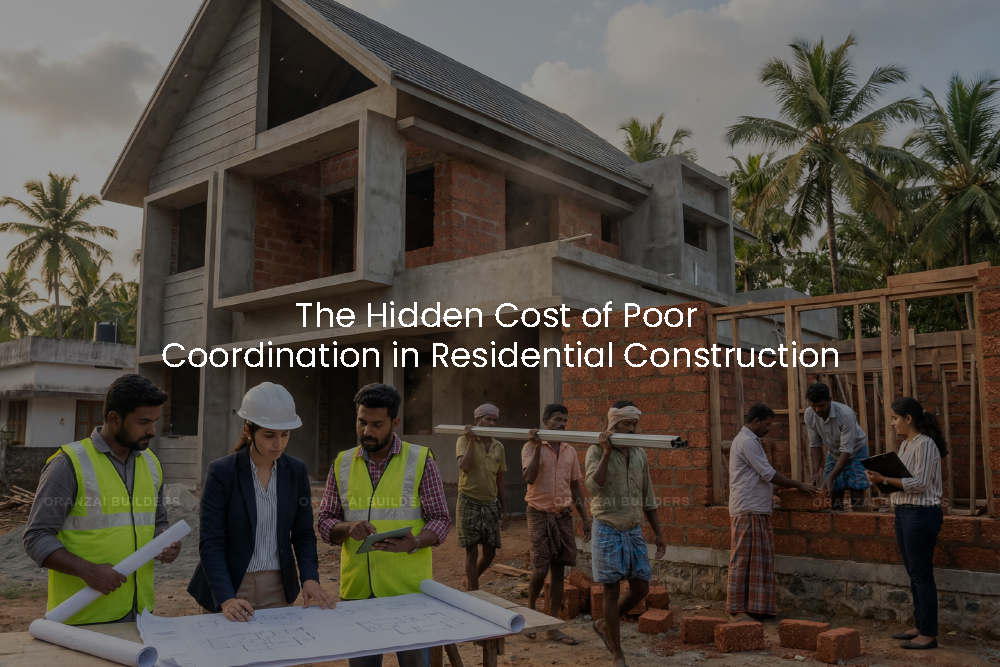
When homeowners plan a new house, they usually focus on design, materials, and budget. Very few think about coordination. Yet, after years of handling turnkey residential construction, I can say this with certainty.
Poor coordination is one of the most expensive mistakes in home building.
Not expensive in an obvious way like premium marble or imported fittings. Expensive in delays, rework, stress, budget leakage, and compromised quality. And most of these costs remain hidden until it is too late.
If you are searching for the Best Turnkey Construction Company in Kerala, understanding coordination is critical. Because in new residential construction, success is not just about good design or strong materials. It is about how well every moving part works together.
What Coordination Really Means in Residential Construction
A house is not built by one team. It involves:
• Architects
• Structural engineers
• Site engineers
• Masonry teams
• Electricians
• Plumbers
• Carpenters
• Interior installers
Each works at different stages. Each depends on the accuracy of the previous stage.
Coordination means ensuring that architecture, structure, services, and home interiors are aligned before and during execution. It means decisions are not isolated. They are interconnected.
Without coordination, even technically correct work can create problems for the next stage.
The First Hidden Cost: Rework
Rework is the most common consequence of poor coordination.
For example:
• Electrical conduits placed without aligning with ceiling design
• Plumbing lines clashing with structural beams
• Window openings misaligned with interior furniture layouts
• Staircase dimensions not matching final floor finish levels
These mistakes are rarely visible in the beginning. They appear when the next team starts work.
Correcting them means breaking, modifying, or adjusting finished work. That leads to material wastage, labor duplication, and schedule disruption.
Rework is not just a cost issue. It is a quality compromise.
The Second Hidden Cost: Timeline Delays
Construction is a sequence-based process. One delay impacts multiple downstream activities.
When coordination fails:
• Interior work cannot begin on time
• False ceilings get delayed due to service conflicts
• Flooring installation pauses because plumbing adjustments are required
• Kitchen installation is held up due to electrical revisions
Each delay pushes the overall timeline forward. Labor scheduling becomes inefficient. Material deliveries get rescheduled. Site productivity drops.
For homeowners building a new house, time matters. Delays extend rental expenses, loan interest burdens, and emotional fatigue.
Strong coordination protects timelines.
The Third Hidden Cost: Budget Leakage
Budget overruns rarely happen because of one big decision. They happen through small, repeated corrections.
Examples include:
• Additional material required due to wrong measurements
• Extra fittings because of layout changes
• Modification costs for structural adjustments
• Additional labor charges for repeated work
When coordination is weak, these incremental costs accumulate quietly.
By the time the project nears completion, the final expense looks significantly different from the original estimate.
Homeowners seeking the Best Construction Company in Kerala should always ask how cost control is linked to coordination systems. The answer reveals how disciplined the execution process truly is.
Structural and Interior Misalignment
One of the most common coordination failures happens between structural planning and interior design.
If beams, columns, and slab levels are not aligned with interior intent:
• Ceiling heights may reduce unexpectedly
• Interior lighting concepts become impractical
• Wardrobe alignments shift
• Window placements feel awkward
These issues are not design flaws. They are coordination failures.
In turnkey construction, structure and interiors must be developed together, not sequentially. That integration prevents compromise at later stages.
Services Coordination: The Most Overlooked Area
Electrical and plumbing systems run through every part of the house. They must be coordinated before walls are closed and ceilings are finished.
Without structured coordination:
• Switchboards conflict with furniture
• Drain slopes are insufficient
• AC lines interfere with structural elements
• Service access becomes difficult
Correcting these later is disruptive and expensive.
In organized turnkey projects, service layouts are finalized in detail before execution begins. That discipline protects both aesthetics and functionality.
The Psychological Cost to Homeowners
Poor coordination does not just affect the building. It affects the homeowner.
Frequent calls about site issues.
Unexpected cost discussions.
Repeated design revisions.
Decision fatigue due to reactive problem-solving.
Building a new home should feel structured and predictable. When coordination fails, homeowners are pulled into daily crisis management.
This is avoidable with the right execution framework.
Why Single-Point Responsibility Reduces Coordination Risk
Fragmented construction models separate design, construction, and interiors across different vendors. When problems arise, responsibility becomes unclear.
In contrast, a single-point responsibility model aligns accountability.
Architecture, construction, and home interiors are handled within one coordinated system. Decisions are made with full visibility of structural, service, and interior implications.
At Oranzai Builders, this integrated approach is central to how projects are delivered. It is one of the reasons many homeowners consider them the Best Turnkey Construction Company in Kerala. Coordination is not an afterthought. It is built into the workflow from day one.
Coordination Is a Technical Discipline, Not Just Communication
Good coordination is not just about meetings. It requires:
• Detailed working drawings
• Cross-disciplinary reviews
• Structured approval processes
• Clear documentation control
• On-site supervision aligned with drawings
When these systems are in place, conflicts are resolved on paper before they become problems on site.
This is what structured project execution looks like in residential construction.
Conclusion: The Cost You Do Not See Is the One That Hurts Most
Most homeowners plan their house budget around visible elements. Flooring, finishes, interiors, elevation design.
Very few budget for the cost of poor coordination. Yet that cost often becomes the most damaging.
Rework. Delays. Budget leakage. Compromised detailing. Stress.
In new residential construction, coordination is the invisible framework holding everything together.
If you are planning your home and want clarity, accountability, and disciplined execution, it is important to choose a team that manages architecture, construction, and interiors as one integrated responsibility.
At Oranzai Builders, coordination is treated as a technical backbone, not an optional layer. If you would like to understand how structured turnkey construction can reduce hidden risks in your project, a professional consultation can provide clarity before construction begins.