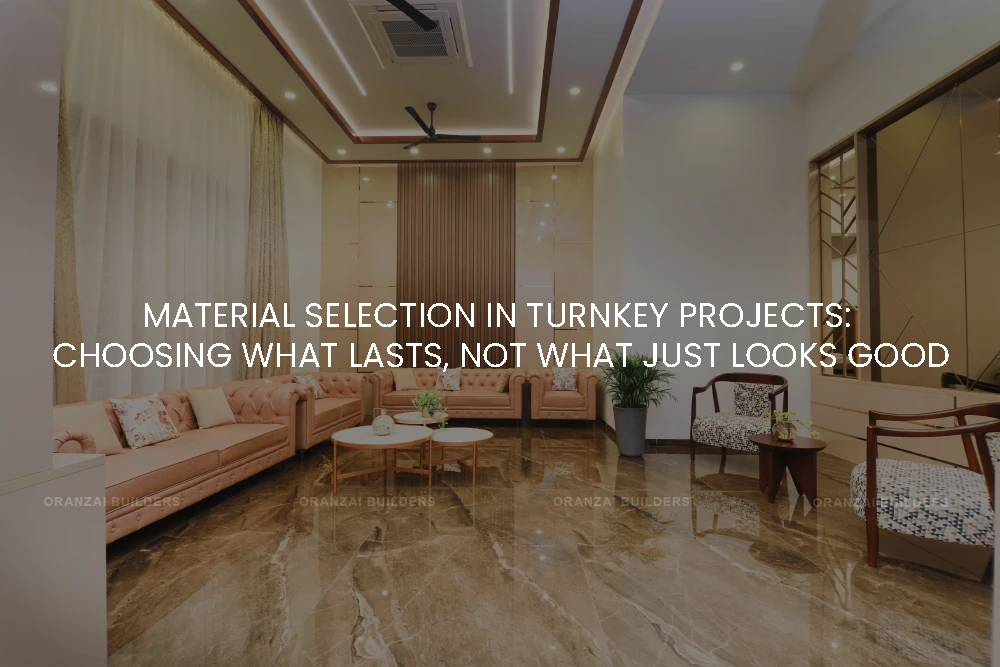
When homeowners plan a new house, material selection is often driven by appearance. What looks premium today. What feels trending on social media. What a neighbour recently used.
In turnkey house construction, this approach almost always leads to regret.
A home is not a display piece. It is a long-term, lived-in structure that must perform well every day, across seasons, usage patterns, and time. The real value of materials is not how they photograph, but how they age, wear, and respond to daily life.
In this article, we break down how material selection should be approached in a turnkey project, and why choosing what lasts matters far more than choosing what only looks good on day one.
Why Material Selection Is Critical in Turnkey Construction
In a turnkey construction model, architecture, structure, services, and interiors are executed as one integrated system. Materials are not selected in isolation. Each choice affects durability, maintenance, timelines, and overall cost control.
Unlike fragmented construction, where different vendors shift responsibility, a turnkey team is accountable for performance at handover and beyond. That makes material decisions practical, experience-driven, and outcome-focused.
The goal is simple.
A house that still feels solid, functional, and well-finished years after you move in.
The Difference Between Showroom Appeal and Site Performance
Many materials perform well in showrooms but behave very differently on real construction sites.
Lighting, dust, moisture, heat, usage, and workmanship all impact how materials age. What looks smooth and flawless under display lights may show wear quickly once installed in a lived-in home.
Experienced turnkey teams evaluate materials based on:
• How they respond to local climate
• How forgiving they are during installation
• How easily they can be repaired or replaced
• How they age over time, not just at handover
Good material selection is about performance consistency, not initial impression.
Structural and Core Materials: Where Longevity Begins
The longest-lasting homes are built on solid, sensible core material choices.
Concrete, steel reinforcement, masonry blocks, waterproofing systems, and plaster finishes are never visible once the house is complete. Yet these are the materials that decide whether a home develops cracks, leaks, or structural issues later.
In turnkey projects, these selections are based on:
• Soil conditions and site characteristics
• Load requirements and spans defined by architecture
• Long-term moisture protection, especially in slabs, bathrooms, and terraces
Cutting corners here never shows immediately, but problems surface years later, when repair becomes disruptive and expensive.
Flooring Materials: Balancing Wear, Comfort, and Maintenance
Flooring is one of the most misjudged material decisions in new houses.
Homeowners often choose flooring purely based on finish or size. In reality, flooring must be selected based on usage zones, foot traffic, and maintenance expectations.
For example:
• Living and dining areas need abrasion resistance and easy cleaning
• Bedrooms benefit from comfort and thermal balance
• Kitchens require stain resistance and slip control
• Staircases need durability and safety
In turnkey construction, flooring is selected after layout planning, furniture zoning, and interior flow are finalized. This avoids mismatched finishes and ensures practical performance across the home.
Wall Finishes and Paints: Not All Smooth Surfaces Are Equal
Wall finishes define the feel of interiors, but they also reveal workmanship quality more than any other element.
High-gloss or ultra-smooth finishes may look premium initially, but they highlight minor imperfections over time. They also show dents, touch-ups, and ageing more clearly.
A seasoned approach considers:
• Surface tolerance over large wall spans
• Lighting impact on texture visibility
• Ease of repainting after a few years
• Compatibility with electrical and furniture installations
The best wall finishes are those that remain forgiving, breathable, and easy to maintain, while still delivering a clean architectural look.
Kitchen and Wardrobe Materials: Daily Use Changes Everything
Kitchens and wardrobes are high-use interior elements. Material failure here is felt immediately.
Boards, laminates, shutters, hardware, hinges, and internal carcass materials must handle:
• Daily opening and closing
• Weight load from storage
• Moisture and heat exposure
• Cleaning chemicals
In turnkey interior execution, material selection is aligned with actual usage patterns, not catalogue aesthetics. This ensures drawers do not sag, shutters do not warp, and finishes do not peel within a few years.
Longevity in these spaces depends more on internal material quality than external appearance.
Bathroom Materials: Moisture Resistance Over Visual Drama
Bathrooms are harsh environments. Constant moisture, temperature changes, and cleaning agents test materials daily.
Visually striking finishes often fail if they are not designed for wet conditions. Slippery tiles, porous stones, and incompatible sealants become safety and maintenance issues.
A practical turnkey approach prioritizes:
• Waterproofing systems beneath finishes
• Slip resistance where required
• Drainage slope compatibility
• Joint durability and sealing quality
A bathroom that looks calm, clean, and functions reliably for years is far more valuable than one that impresses only at handover.
External Materials: Weather Is the Real Test
External finishes face sun, rain, dust, and pollution every day. Materials that fade, crack, or stain easily increase maintenance costs and reduce visual appeal over time.
In turnkey house construction, external material selection is guided by:
• Orientation and exposure
• Long-term colour stability
• Cleaning and repainting cycles
• Structural movement tolerance
A home’s exterior should age gracefully, not demand frequent intervention.
Why Integrated Teams Make Better Material Decisions
Material selection works best when architects, construction engineers, and interior designers collaborate from the beginning.
This integration ensures:
• Materials suit structural realities
• Interior finishes align with services and detailing
• Procurement matches execution capability
• Cost impact is understood early, not corrected later
Single-point responsibility removes guesswork and finger-pointing. Decisions are made with full accountability for results.
Conclusion: Choose Materials That Respect Time, Not Trends
A well-built home should feel dependable long after trends change. Good materials quietly do their job, year after year, without demanding attention.
In turnkey projects, the real success of material selection is measured not at handover, but years later, when the house still feels solid, comfortable, and easy to live in.
At Oranzai Builders, material decisions are guided by experience, performance, and responsibility. Every choice is made with the full lifecycle of the home in mind, not just its first impression.
If you are planning a new house and want clarity on material selection that truly lasts, a structured consultation can help align expectations before execution begins.