Building Permit in Kerala: Documents, Steps and K-SMART
Before a single foundation is dug, a new home in Kerala needs a building permit from the local body: the panchayat, municipality or corporation where your plot sits. For many families, especially those planning from the Gulf, this is the most confusing part of building a home. This guide covers the building permit documents required in Kerala, the steps to apply on K-SMART, and the checks worth doing before you buy a plot or start your design.
Rules and online systems are updated from time to time, so treat this as a starting point and confirm the details with your local body or your architect before you apply.
Who issues a building permit in Kerala?
Your building permit comes from the local self-government body for your plot:
- Grama panchayat for most rural plots, under the Kerala Panchayat Building Rules.
- Municipality or corporation for urban plots, under the Kerala Municipality Building Rules.
The rules decide how much of the plot you can build on, how far the house must be from the boundaries and the road (setbacks), the number of floors, parking and more. Your architect designs within these rules from the first sketch, which is why it helps to know your local body before the design starts.
Building permit documents required in Kerala
The exact list depends on your plot and your local body, but most applications for a new home include:
- Ownership document: the registered title deed (aadharam) for the plot.
- Latest land tax receipt: to show the tax for the plot is paid up to date.
- Possession or location details: some local bodies ask for a possession certificate or a location sketch from the village office.
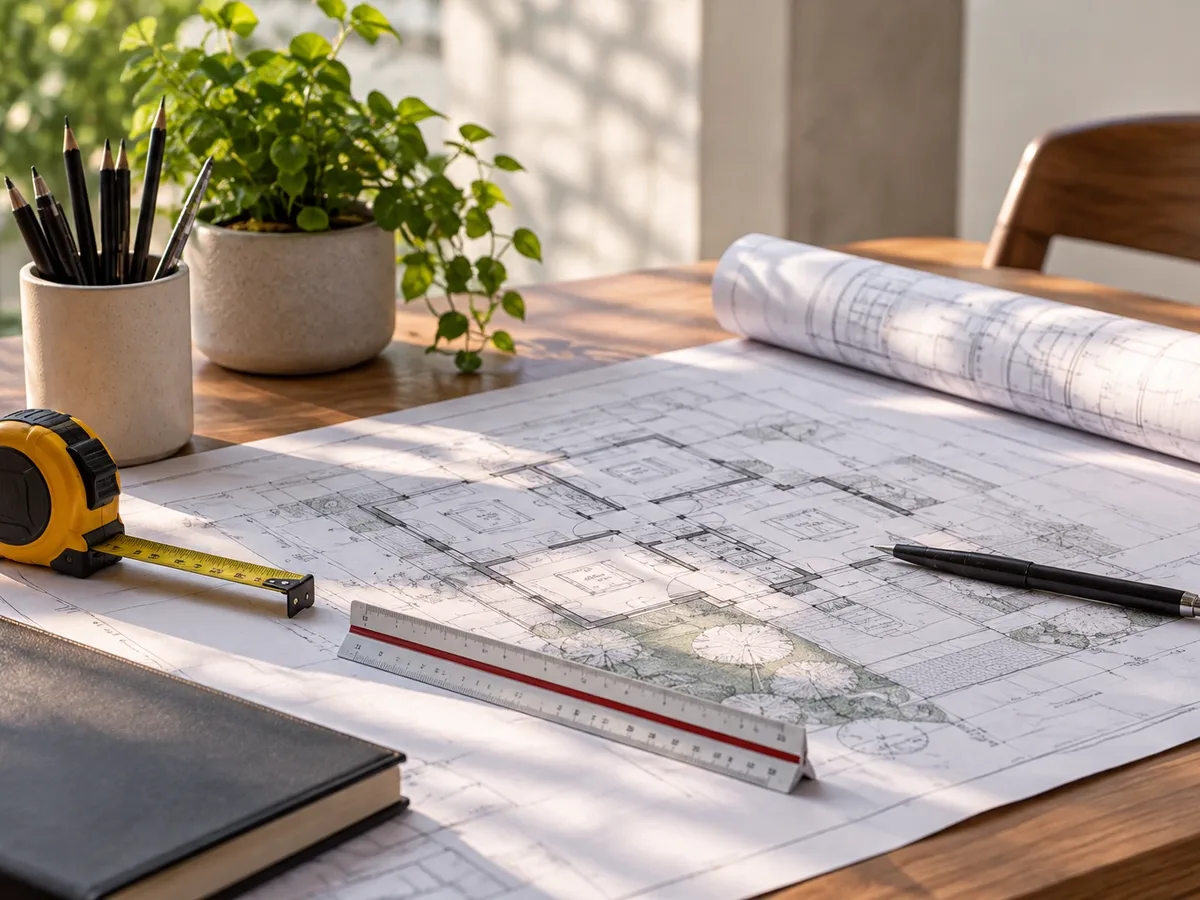
- Building plans: site plan, floor plans, sections and elevations, prepared and signed by a registered architect or a licensed engineer or building designer.
- Applicant’s ID proof: and, if someone applies on your behalf, the authorisation for that (see the NRI section below).
- No-objection certificates (NOCs), only where they apply: for example, plots near a railway line, airport, heritage site, coastal zone or water body may need clearance from the authority concerned.
- Other certificates for larger or special buildings: such as a structural stability certificate, depending on the size and type of building.
Tip: keep scanned copies of every document in one folder. Most of the process is online now, and a missing or unclear scan can hold up your application.
How to apply on K-SMART: the steps
K-SMART is the Kerala government’s online platform for local body services, including building permits. In broad terms, the process looks like this:
- Check the plot first. Confirm the land type, road access and any restrictions (more on this below).
- Get the drawings prepared. A registered professional prepares the permit drawings to meet the building rules for your local body.
- Submit online. The application, drawings and documents are uploaded on K-SMART, and the application fee is paid online.
- Site inspection and scrutiny. The local body checks the drawings against the rules and may inspect the site.
- Respond to queries. If anything is missing or needs changing, you get a remark to answer, and the application moves forward once it is resolved.
- Permit issued. Once approved, the permit can be downloaded. Keep a copy on site during construction.
For some smaller, low-risk buildings, there is also a faster route where a licensed professional certifies that the plan meets the rules. Ask your architect whether your home qualifies.
Checks to do before you buy or build
Many permit problems start with the plot, not the paperwork. Before you buy land or finalise a design, check:
- Land type. If the plot is recorded as paddy land or wetland, building on it can be restricted or need conversion first. Check the village records and the data bank (the official list of paddy land and wetland) before you buy.
- Road access and width. The width of the road your plot faces affects setbacks and what you can build.
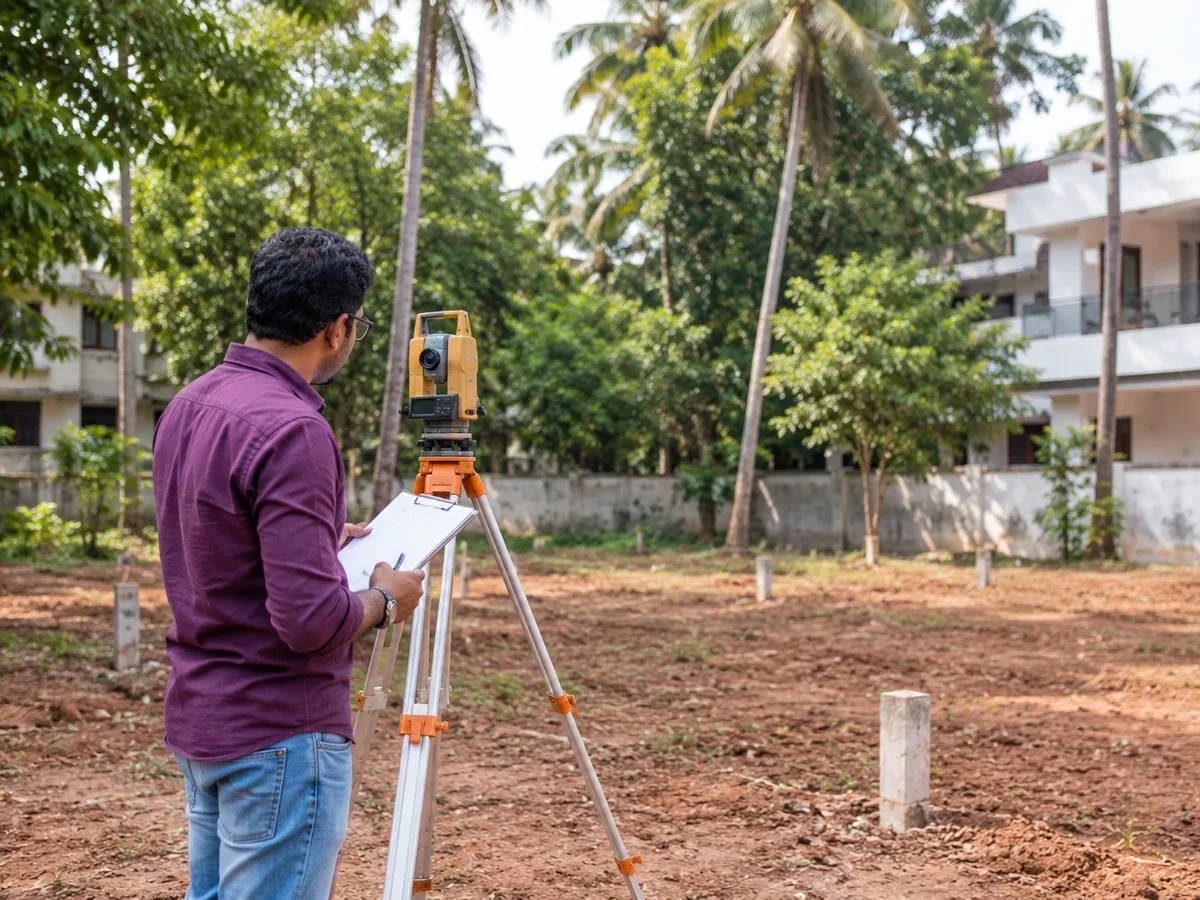
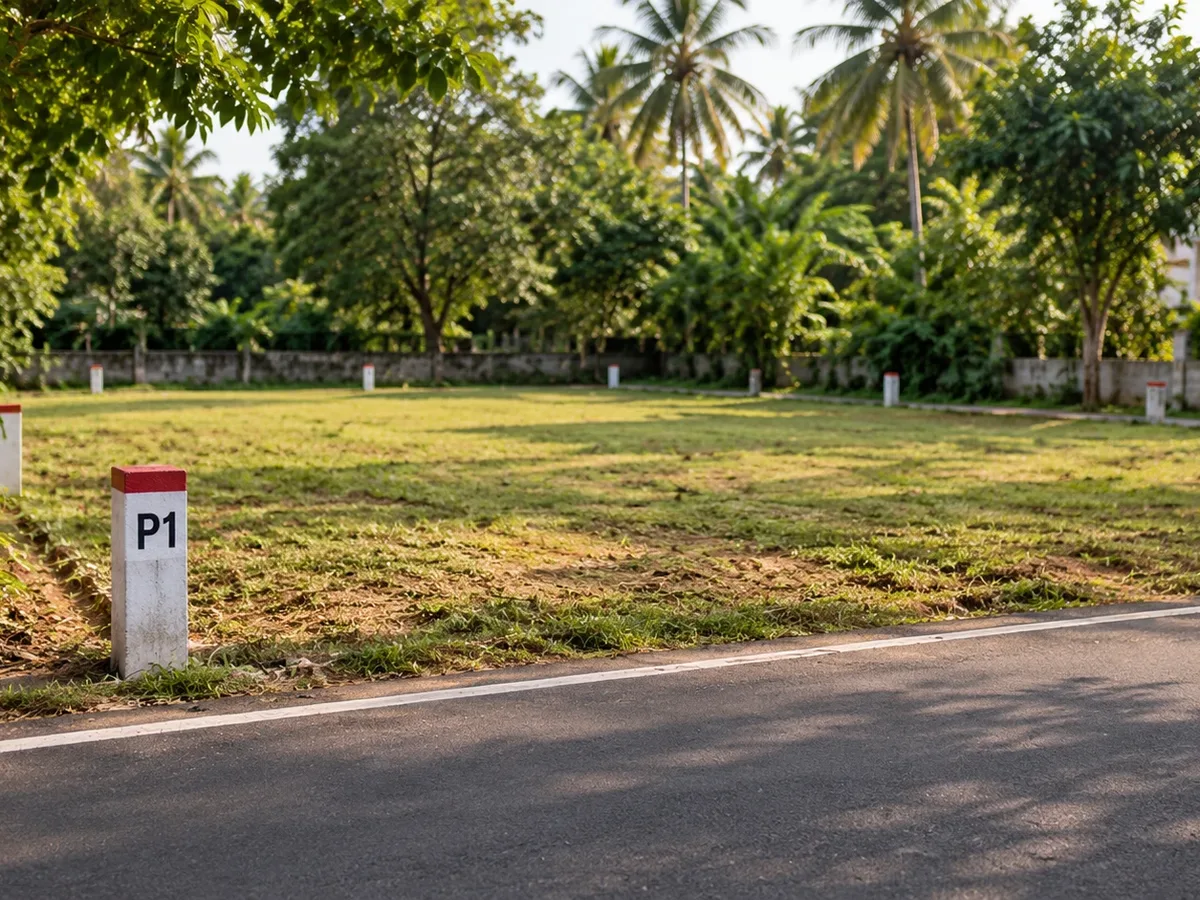
- Boundaries and survey. Make sure the plot boundaries on the ground match the documents. A survey before design avoids surprises later.
- Nearby restrictions. Railway lines, airports, heritage sites, rivers and the coast can all bring extra rules.
We cover more of these in the plot challenges architects look for before designing.
Building permits for NRIs and Gulf families
If you live abroad, you can usually have a trusted family member handle the application on your behalf with a properly authorised power of attorney. Online applications on K-SMART also mean fewer trips to the local body office.
What matters most is having one team that keeps the documents, drawings and queries moving while you are away, and keeps you updated at each step.
After the permit: occupancy certificate
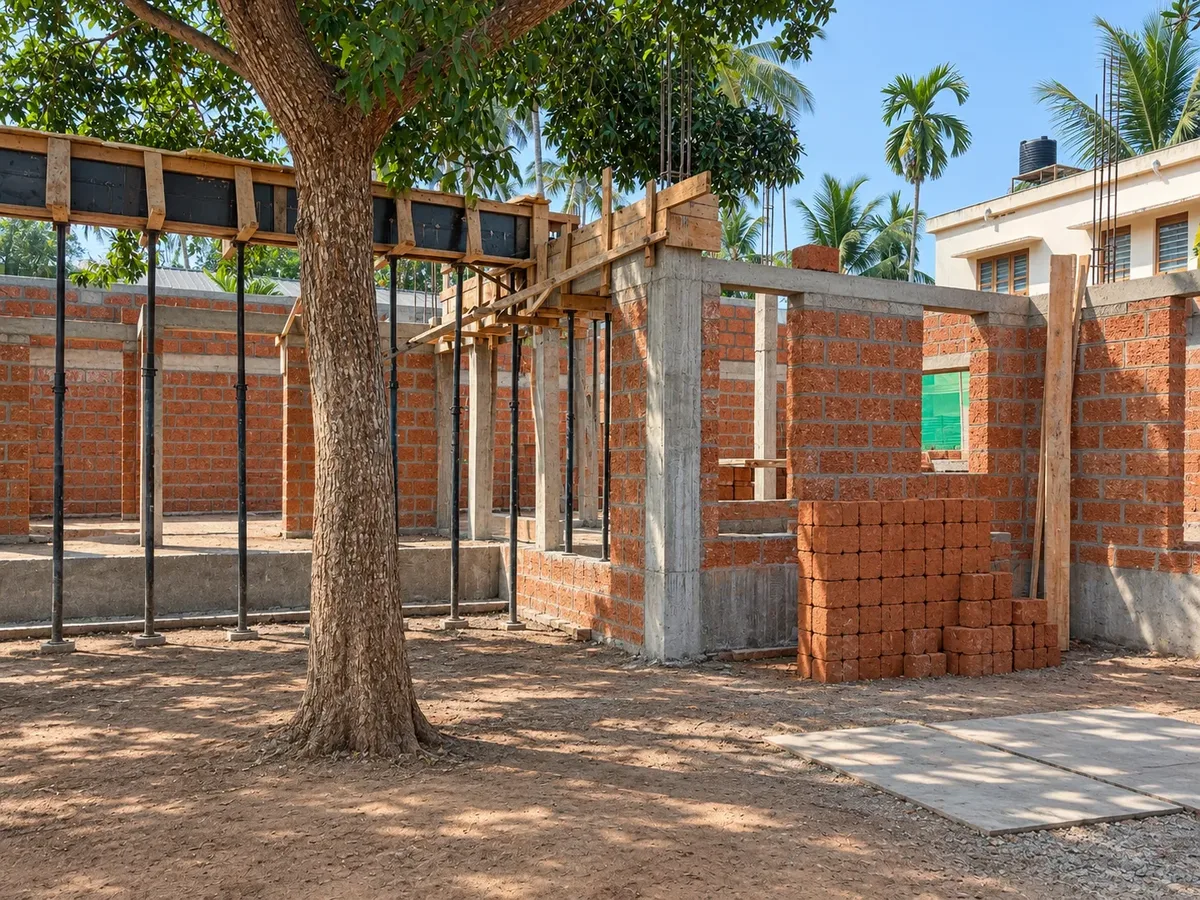
The permit is not the last approval. When construction is complete, the local body inspects the house and issues an occupancy certificate. It is generally needed to get your house number and building tax assessment, and usually for permanent electricity and water connections. Building to the approved plan from the start makes this step much smoother.
Building permit in Kerala: common questions
Do I need the building permit before I start any work on site?
Yes. Construction should start only after the permit is issued. Clearing the plot and a site survey are fine before that; foundations are not.
Can I change the design after the permit is issued?
Small changes during construction are common, but changes to the size, height or layout of the building usually need a revised permit. Talk to your architect before you change anything on site.
Who signs the permit drawings?
A registered architect or a licensed engineer or building designer prepares and signs them. They are also responsible for making sure the drawings follow the building rules.
I live abroad. Do I need to come to Kerala to apply?
Usually not. With online applications and a family member authorised to act for you, most of the process can be handled while you are away.
Permits and approvals with Oranzai Builders
At Oranzai Builders, building plans and approvals are part of what we do. Our in-house architects prepare drawings that work within your local body’s rules from the first sketch, and the same team designs and builds your home, from design to handover. We prepare construction drawings within days of site measurement, so your application can move without long waits on our side.
Learn more about our architecture and home design and turnkey construction.
Planning your home in Kerala?
Whether you live in Kerala or in the Gulf, send us your plot details and we’ll talk you through the approvals your home will need.
- WhatsApp us: Chat with us on WhatsApp
- Call: +91 80891 52201
Related reading: Vastu for Kerala homes by facing direction · Hidden plot challenges architects identify · Modern tropical house design in Kerala · Designing your dream home in Kerala
