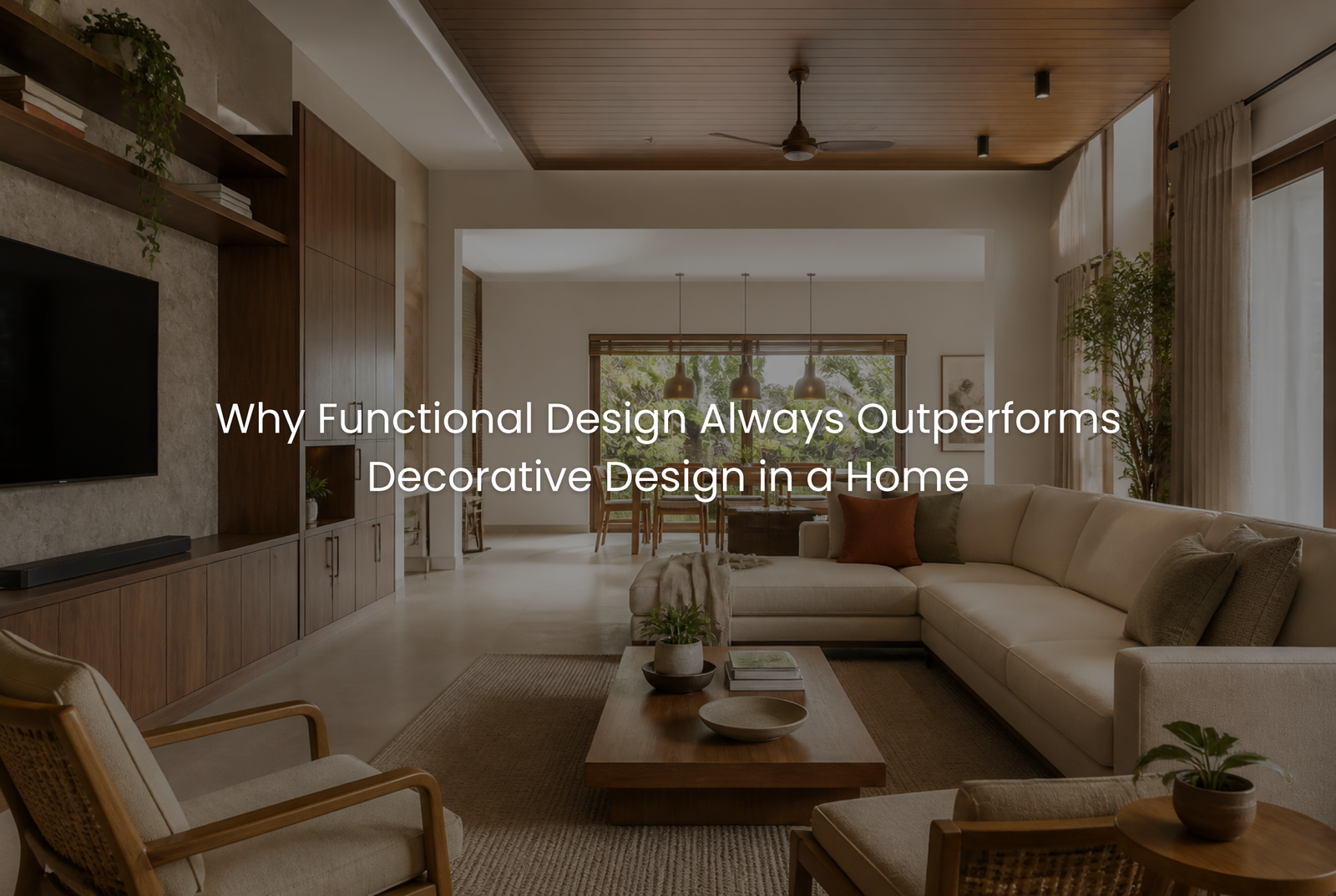
A home can look impressive in photographs and still feel difficult to live in. Furniture may be beautiful but block movement. Storage may look minimal but leave everyday belongings without a proper place. Decorative lighting may create atmosphere but provide poor illumination for daily activities.
These are common signs of a home where appearance was considered before functionality.
Good residential interior design should do more than make a home look attractive. It should make everyday life easier. For homeowners planning a new apartment, villa, or independent house, functional design creates the foundation on which aesthetics can be built.
This is one reason choosing an experienced partner, such as the Best Construction Company in Kerala, matters. When architecture, space planning, furniture, materials, lighting, and execution are considered together, the result is usually more comfortable and practical.
What Does Functional Interior Design Really Mean?
Functional design is not about creating plain or unattractive spaces.
It means every major design decision has a purpose.
A well-planned home should answer practical questions such as:
- Can people move comfortably through the room?
- Is frequently used storage easy to access?
- Does the furniture suit the room’s proportions?
- Is there enough lighting for different activities?
- Are surfaces appropriate for everyday use?
- Can the space accommodate the family’s lifestyle?
- Will the design continue to work as requirements change?
Once these questions are answered, decorative elements can be introduced without compromising usability.
Space Planning Should Come Before Decoration
The most important functional decision is often the least visible one, the layout.
Before selecting furniture finishes or decorative elements, the available space needs to be studied carefully.
Professional space planning considers circulation, furniture dimensions, door openings, windows, storage, electrical requirements, and the way family members actually use each room.
A beautiful sofa is of little value if it leaves insufficient walking space. A large dining table may look impressive but become inconvenient if people cannot move comfortably around it.
This is where residential interior design experience makes a difference. The goal is not to fill a room. It is to create a room that works.
Furniture Should Support the Way You Live
Furniture is one of the strongest connections between design and daily life.
A family with young children may require more open floor space. A homeowner who works from home may need a dedicated work area. A large family may need generous dining and seating arrangements.
Custom furniture can be particularly useful when standard sizes do not make efficient use of the available space.
Built-in wardrobes, storage units, study desks, entertainment units, and other furniture can be designed around the room rather than forcing the room to accommodate them.
However, customization should be purposeful. Good custom furniture provides storage, improves organization, and uses space efficiently without making future changes unnecessarily difficult.
Storage Is a Functional Requirement, Not a Decorative Feature
One of the most common problems we encounter in completed homes is insufficient storage.
When storage is not planned properly, even an attractive home can quickly become cluttered.
Storage should be considered according to the family’s actual needs. Bedrooms may require wardrobes and linen storage. Entry areas may need space for footwear and everyday belongings. Kitchens need organized storage for appliances, cookware, groceries, and utensils.
Modular interiors can help organize these requirements efficiently, while custom furniture can address spaces with unusual dimensions or specific functional needs.
The objective is simple, everything should have a logical place.
Lighting Should Serve the Room First
Lighting is often selected based on appearance alone, but its primary responsibility is to support the activities taking place in the space.
A living room may need general illumination, reading light, accent lighting, and softer evening lighting. A kitchen requires practical task lighting around work areas. Bedrooms benefit from comfortable ambient lighting along with focused illumination where needed.
Natural light should also be considered during the planning stage.
A successful lighting design combines function and atmosphere. Decorative fixtures can add character, but they should not replace the lighting required for comfortable everyday use.
Materials Should Be Selected for Real Life
A material can look excellent in a showroom and perform poorly in a busy home.
Material selection should consider where and how the surface will be used.
High-use areas need finishes that can handle regular cleaning and everyday wear. Kitchens and utility areas require materials suited to moisture and frequent use. In Kerala, humidity and climatic conditions should also influence material decisions.
This does not mean every home needs expensive materials.
A well-designed interior uses materials according to their purpose, balancing durability, maintenance, appearance, and budget.
That approach is particularly important in luxury home interiors, where visual quality should be supported by long-term performance.
Decoration Works Best When It Supports the Design
Decorative elements have an important role in creating personality.
Artwork, rugs, feature walls, curtains, accessories, lighting fixtures, and carefully selected furniture can make a space feel distinctive.
The problem begins when decoration becomes the main design strategy.
For example, adding a feature wall will not solve poor furniture placement. Decorative lighting cannot compensate for insufficient task lighting. A statement furniture piece cannot fix inadequate storage.
When the functional foundation is strong, decorative elements become more effective because they enhance an already successful space.
Good Design Reduces Daily Effort
One of the clearest signs of functional design is that homeowners stop noticing the design decisions because everything simply works.
Doors open without interfering with furniture. Storage is easy to access. Lighting is available where it is needed. The kitchen workflow feels natural. Frequently used items have convenient storage. Rooms do not feel unnecessarily crowded.
These details may not always appear dramatic in a design presentation, but they have a significant impact on everyday comfort.
In our experience, homeowners tend to appreciate these practical decisions more and more as they live in the home.
Functionality Also Protects Your Investment
Good functional planning can reduce unnecessary changes after handover.
Poorly planned storage may lead to additional furniture later. Inadequate lighting may require electrical modifications. Incorrect furniture proportions can create circulation problems. Unsuitable materials may require premature replacement.
These issues are easier and less expensive to address during the design stage.
This is why professional planning is particularly valuable when selecting the Best Construction Company in Kochi or the Best Architecture Company in Kerala. Homeowners should look beyond visual presentation and understand whether the company considers how the home will actually perform after completion.
Common Mistakes to Avoid
Several decisions can make a home look good while reducing its functionality:
Designing Around Trends
A trend may look attractive today but may not suit your family’s lifestyle or remain relevant over time.
Buying Furniture Before Finalizing the Layout
Furniture dimensions can significantly affect circulation and available space.
Ignoring Storage
Insufficient storage is difficult to correct without compromising the original design.
Choosing Materials Only for Appearance
Performance, maintenance, and suitability should be considered alongside visual appeal.
Treating Lighting as a Final Detail
Lighting should be coordinated with furniture, ceiling design, electrical planning, and room usage.
Making Last-Minute Changes
Late changes can create conflicts between furniture, electrical points, lighting, and other design elements.
Why Integrated Planning Creates Better Homes
Functional design becomes much easier when architecture, construction, interior design, furniture, lighting, materials, and execution are coordinated.
Window locations affect furniture. Furniture affects electrical points. Storage affects circulation. Ceiling design affects lighting. Material choices affect maintenance.
When these decisions are made separately, homeowners often face compromises.
An integrated approach allows the design team to identify these relationships before execution begins. This is particularly valuable for homeowners seeking complete residential solutions rather than managing multiple disconnected teams.
Conclusion
Decorative design can make a home visually impressive, but functional design determines how well that home performs every day.
Effective space planning, practical furniture, adequate storage, suitable materials, thoughtful lighting, and coordinated execution create interiors that remain comfortable long after the initial excitement of moving in has passed.
The strongest homes do not force homeowners to choose between beauty and functionality. Good interior design brings both together.
At Oranzai Builders, residential architecture, construction, interior design, space planning, custom furniture, material selection, lighting, and execution are coordinated as part of one complete approach. This allows each decision to support both the appearance and everyday performance of the home.
For homeowners looking for the Best Interior Design Company in Kerala or a complete residential partner, thoughtful functional planning is one of the most valuable decisions you can make before construction and interior execution begin.
Planning a new apartment, villa, or independent house? Consult Oranzai Builders for professionally coordinated residential architecture, construction, and interior design tailored to the way your family lives.